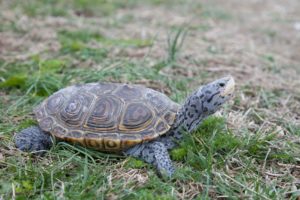
Spotted Turtle
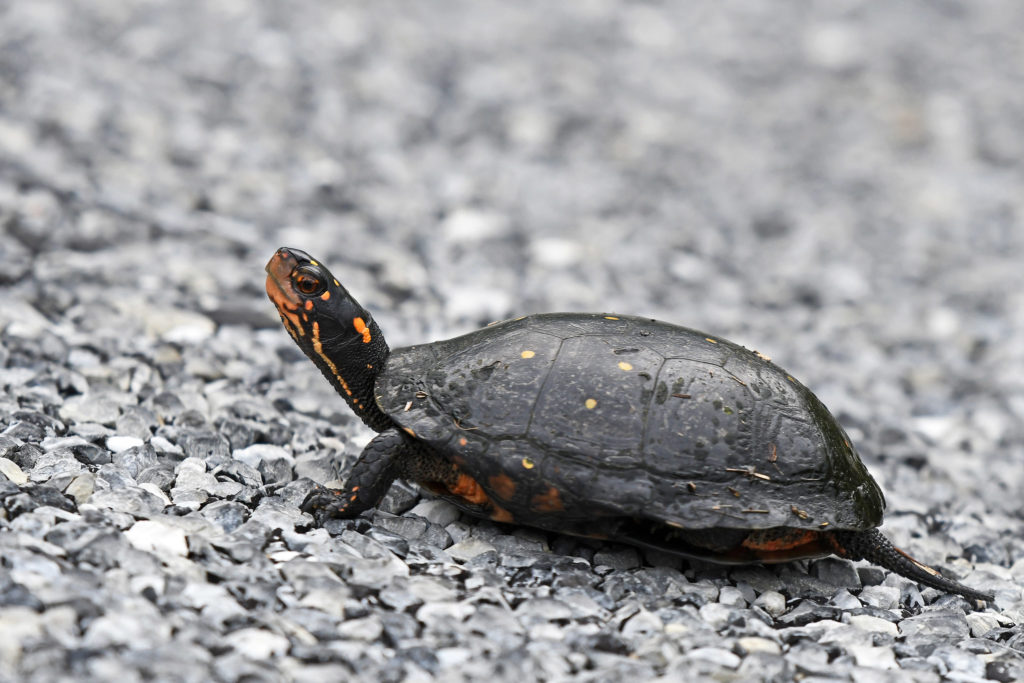
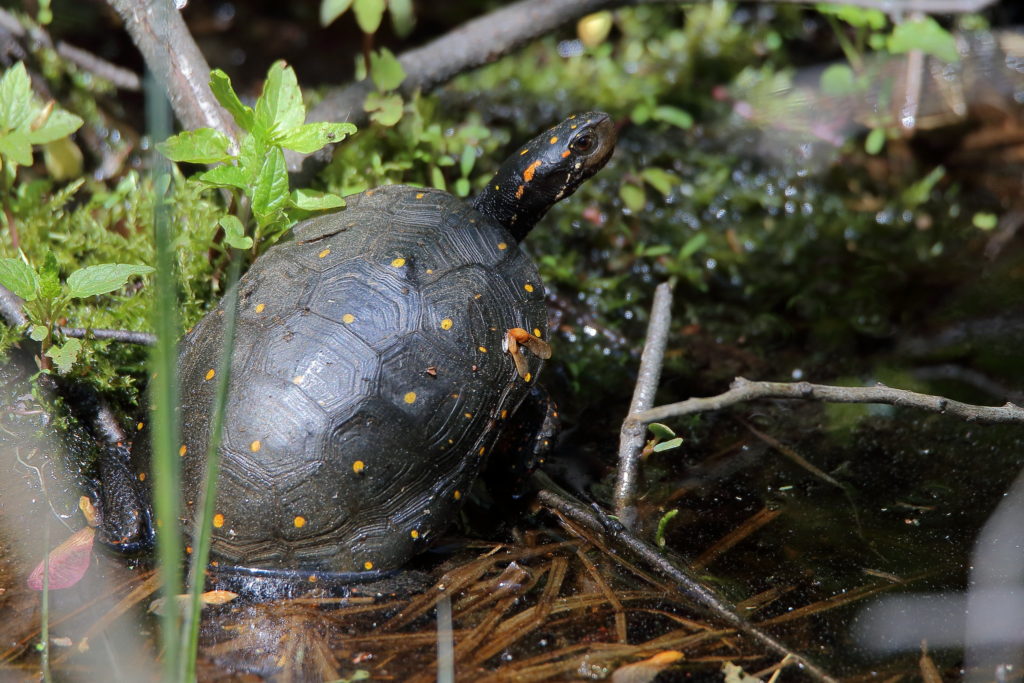
The Spotted Turtle (Clemmys guttata) is a small, secretive, semi-aquatic species that is found in a wide variety of shallow wetland habitats and their adjacent upland areas. It was once considered the most common turtle in New York State and on Long Island. Today it is listed as a “Species of Special Concern” by the NYSDEC. This designation is given to species determined by the Department of Environmental Conservation to be at risk of becoming either endangered or threatened in New York State.
A 2005 report by Mike Bottini documented the impact of mosquito ditch maintenance practices on Spotted Turtles, and resulted in important changes to Suffolk County’s Vector Control procedures.
Today, illegal turtle collecting for the pet trade is a significant factor in the long term viability of Spotted Turtle populations on Long Island and throughout the species range.
Report on spotted turtles (Clemmys guttata)/ Use of mosquito-control ditches in Suffolk County, NY
Related Information

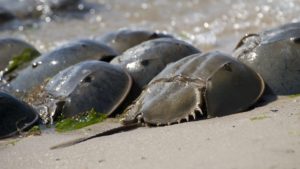
Horseshoe Crabs
The horseshoe crab (Limulus Polyphemus) has been around practically unchanged for over 450 million years, categorizing it as a “living fossil”. These fascinating creatures aren’t actually crabs at all, as they don’t fall under the subphylum “crustacea,” which includes blue crab, spider crabs and other true crabs.
Coyotes
Coyotes Coyotes on Long Island: Background The following videos, from presentations made by Gotham Coyote founders Mark Weckel and Chris Nagy at the 2015 Long Island Natural History Conference, (while already slightly outdated) provide excellent background about how coyotes arrived in our

West Brook
The only dam on West Brook, a major tributary of the Connetquot River, failed in 2019 and allowed the artificial pond behind it to drain. For the first time in over 100 years, the brook could once again flow naturally from its headwaters in Bayard Cutting Arboretum State Park down to the tidal reaches of the Great South Bay. It is now one of a only a few free-flowing streams on Long Island. It has great ecological potential as a place where migratory fish can return and other native riverine species can once again find a home.